
Far West Native Spearmint

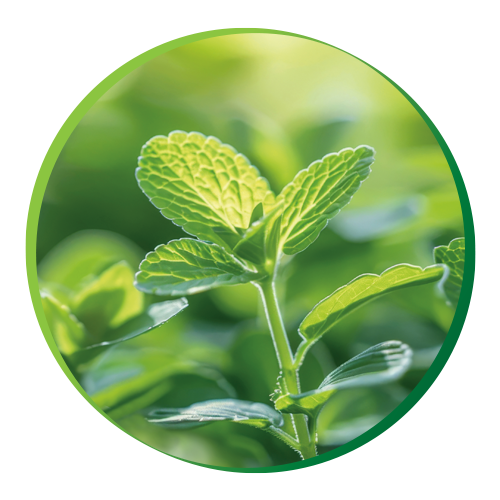
Native Spearmint (Mentha spicata L., syn. Mentha viridis) is a perennial aromatic herb belonging to the mint family, Lamiaceae. The trade designation “Far West Native” refers to authentic Mentha spicata cultivated under specialized agricultural protocols in the Pacific Northwest states of Washington, Idaho, and Oregon.
Crisp • Clarity • Invigorating
History: from colonial subsistence to western dominance
Colonial substitution: Introduced in the 17th century, spearmint became a prominent crop during the American Revolution, harvested as an untaxed domestic herbal tea.
Midwestern boom & fungal collapse: In the 19th century, commercial distillation expanded through Wayne County, New York, into the black muck soils of southern Michigan and northern Indiana. By the 1930s, soil-borne Verticillium wilt (Verticillium dahliae) devastated Midwestern fields. While M. spicata showed higher natural tolerance than peppermint, crop rotation limits forced growers to seek clean ground.
The “native” designation: The moniker “Native” is historical rather than taxonomic. Native to temperate Europe and the Mediterranean basin, the plant naturalized across North America following European settlement. In 1908, when commercial growers introduced Scotch Spearmint (Mentha × gracilis), the established Mentha spicata was officially designated “Native Spearmint” to prevent market conflation.
The rise of the “far west”: Post-WWII Bureau of Reclamation irrigation developments in Washington, Idaho, and Oregon opened arid, volcanic soils. The combination of cloudless high-latitude summers, low ambient humidity that curtailed foliar rusts, and precision irrigation created an ideal microclimate, establishing the Far West as the global production hub.


Federal marketing order 985
Promulgated in 1980 by the USDA, Federal Marketing Order 985 governs spearmint oil production across Washington, Idaho, Oregon, and designated regions of Utah and Nevada. Administered by the Far West Spearmint Oil Administrative Committee, the order:
- Regulates annual salable quantity allotments to eliminate boom-and-bust market speculation.
- Separates spearmint into legal classes: Class 1 and 2 (Scotch Spearmint) and Class 3 (Native Spearmint).
- Maintains strategic reserve pools to guarantee international flavor and wellness industries an uninterrupted, multi-year supply.

Phytochemical profile & comparative analysis
The aroma and bioactivity of Far West Native Spearmint are governed by monoterpene synthesis inside the peltate glandular trichomes on the foliage:
- (R)-(−)-Carvone (55%–68%): An optically active monoterpene ketone that produces spearmint’s characteristic sweet, herbaceous, pungent aroma without triggering cooling menthol receptors.
- Limonene (15%–24%): A light, citrusy monoterpene hydrocarbon that provides solvent properties and rapid airborne volatilization.
- Low Menthol / Menthone (<1.5%): Unlike peppermint, Native Spearmint contains virtually no menthol, avoiding sensory burning or eye-mucosa irritation in enclosed or diffused spaces.
| Characteristic | Far West Native (Mentha spicata) | Scotch Spearmint (Mentha × gracilis) |
|---|---|---|
| USDA class | Class 3 | Class 1 & 2 |
| Aromatic quality | Bold, pungent, earthy-green, traditional herbal | Sweet, candy-like, smooth, confection-oriented |
| Carvone isomer | (R)-(−)-Carvone (high stability) | (R)-(−)-Carvone (blended with higher esters) |
| Agronomic hardiness | High tolerance to soil pathogens | Moderate to high pathogen susceptibility |
Antifungal, antimicrobial & mold-inhibiting properties
Far West Native Spearmint oil exhibits documented biocidal and fungistatic actions, making it valuable for air hygiene and surface treatments:
- Membrane disruption: The lipophilic nature of (R)-carvone enables it to penetrate fungal cell envelopes, altering membrane fluidity and increasing permeability, which leads to cell lysis.
- Spore germination suppression: Vapor-phase carvone prevents the hyphal extension and germination of common building molds, including Aspergillus niger, Penicillium funiculosum, and Cladosporium species.
- Atmospheric volatility: Because of its balanced boiling point and low molecular weight, Native Spearmint vaporizes efficiently into air currents, actively suppressing fungal proliferation in damp or recirculating air streams.