
Clove Bud

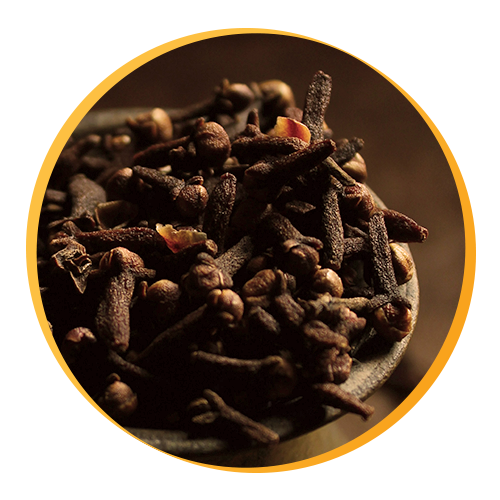
Steam-distilled from the dried, unopened flower buds of Syzygium aromaticum (an evergreen tree in the Myrtaceae family), clove bud oil is one of the oldest, most concentrated botanical sources of eugenol in the world—often containing between 75% and 85% eugenol, alongside eugenyl acetate and beta-caryophyllene. Unlike oil extracted from clove stems or leaves, oil distilled strictly from the flower buds has a richer, sweeter, and more complex aromatic profile with less sharp bitterness.
Spicy • Warm • Stimulating
Historical origins & trade
The Spice Islands (The Moluccas): Cloves were originally native strictly to a tiny cluster of volcanic islands in eastern Indonesia—Ternate, Tidore, Motir, Makian, and Bacan. Because the tree grew nowhere else on Earth, cloves were among the most valuable trade goods by weight in human history.
Ancient empires:
- Han Dynasty China (3rd Century BCE): Court officials and envoys were required to hold whole cloves in their mouths while addressing the emperor so their breath would remain sweet and respectful.
- Rome and the Mediterranean: Arab traders transported cloves via overland and maritime spice routes, guarding the secret of their geographical origins for centuries to protect their astronomical markup.
European monopoly wars: By the 16th and 17th centuries, the Portuguese and later the Dutch East India Company (VOC) waged brutal naval wars to monopolize the Moluccas. The Dutch destroyed wild clove trees across neighboring islands to artificially constrain supply, imposing severe punishments for anyone caught cultivating cloves outside company supervision.
The French botanical smuggle: In 1770, French horticulturist Pierre Poivre successfully smuggled clove seedlings out of the Moluccas to Mauritius and Réunion. From there, cultivation spread to Madagascar, Zanzibar, and Pemba, permanently breaking the monopoly and expanding global availability.
Historical dental medicine: Long before commercial pharmaceuticals existed, dentists and apothecaries relied on clove essence as a frontline remedy to numb toothaches and prevent post-extraction infections.


Core functional & aromatherapeutic benefits
Remarkable antimicrobial & mold-inhibiting properties: Due to its heavy concentration of eugenol, clove bud oil acts as a potent broad-spectrum antibacterial and antifungal agent. Laboratory studies demonstrate that eugenol breaks down microbial cell walls, making it particularly effective at suppressing airborne mold spores, mildew growth, and household bacteria.
Robust atmospheric neutralization: Clove bud oil does not merely cover ambient smells—its volatile organic compounds bind to sulfur- and nitrogen-based malodors (such as cooking greases, stale smoke, and musty dampness), effectively neutralizing them. When diffused into room air, it provides a warm, spicy, and deep base note that grounds lighter top notes like sweet orange, lemon, or pine.
Natural analgesic & anti-inflammatory action: Eugenol acts as a local anesthetic and mild anti-inflammatory by dampening pain signaling pathways. Beyond its well-known utility in oral care formulations, diluted clove bud oil is often used in topical liniments and balms to warm stiff joints, relieve deep muscle aches, and stimulate microcirculation.
Cognitive atimulation & mental clarity: Inhaling clove bud oil activates olfactory receptors connected directly to the brain’s limbic system. Its rich, stimulating profile helps cut through mental fog, lethargy, and afternoon fatigue, enhancing alertness and focus without inducing jitteriness.
Potent antioxidant density: Clove bud oil ranks among the highest essential oils on the ORAC (Oxygen Radical Absorbance Capacity) scale. Its phenolic structure allows it to neutralize free radicals, making it a valuable preservative component in botanical care formulations.
Bud Oil vs. Leaf Oil vs. Stem Oil
| Metric: | Clove Bud Oil (Syzygium aromaticum) | Clove Leaf / Stem Oil |
|---|---|---|
| Plant part used: | Unopened dried flower buds | Mature green leaves or discarded stems |
| Eugenyl Acetate: | High (8%–15%), creating a rounder, sweet scent | Very low (1%–2%), resulting in a harsh edge |
| Aromatic quality: | Warm, sweet, balsamic, rich spice | Sharp, harsh, acrid, medicinal |
| Primary utility: | Premium atmospheric diffusion, perfumery, dental care | Industrial eugenol extraction, chemical isolation |
Safety & formulation notes
Dermal sensitizer: Eugenol is a known dermal irritant and mucous membrane sensitizer. For topical applications, keep dilution rates conservative—typically at or below 0.5% in a stable carrier oil.
Diffusion delivery: Because clove bud oil has low volatility compared to citrus or mint top notes, it lingers longer in the air, acting as an excellent aromatic fixative in ambient whole-home diffusion blends.